I started my year in review post about a month back but I struggled to sum up 2012 with a positive view. Then I listened to a podcast from TrailRunnerNation titled "Unpacking Pandora’s Box with Ashley Walsh and Jimmy Dean Freeman", and it caused me to pause. It was kind of a rambling conversation but then at one point, they were talking about DNF's and when and why you should and how we all need to remember that even a DNF means we tried to do something most people do not. I have heard this before but it never really registered but for some reason it did this time. So although I didn't accomplish everything I wanted to do in 2012, I did get out there and I improved over 2011. Summary:
1016 miles, number 9 of 22 for the most miles (counting year 1 which only was a month of running back in 1991)
117 miles in October, most of any month for the year
51 miles in November, fewest of any month as I worked through the injury from Surf the Murph
5 events entered: 1 DNF (injury), 1 drops in distance (injury), 3 went as planned, kind of
Converted to minimalist running and zero drop shoes
Ankle injury resolved and appears to be in the past
Executive Summary: Injuries, setbacks, motivation, weight yet hope, changes, new initiatives and focus regained.
Injuries - continued to have issues with the ankle through mid year, led to me dropping at Chippewa, after that I went minimalist, the ankle is sound again but torqued a foot at Surf the Murph and finished the year once again working on getting healthy.
Setbacks - calf issue, foot and ankle, gained back weight that was loss after injury setbacks.
Motivation - without it, I don't get out the door. Work drains it, anticipation of races rejuvenate it.
New Initiatives - went minimalist in May, felt good, ankle proprioception improved. Working on zero drop
Focus - work life balance is critical, I need to commit to keeping work in perspective and meet my families needs and my running needs as I need to get in my runs which should lead to weight loss and motivation gains.
Changes - Focusing now on more road runs with a speed twist to build strength and finishing the conversion to zero drop.
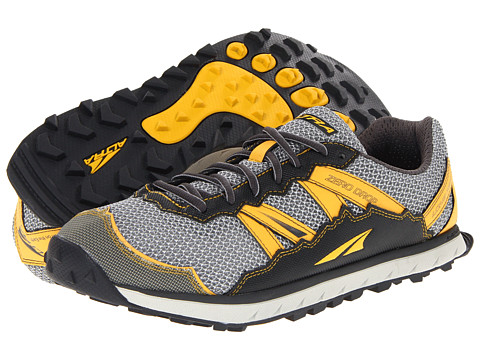
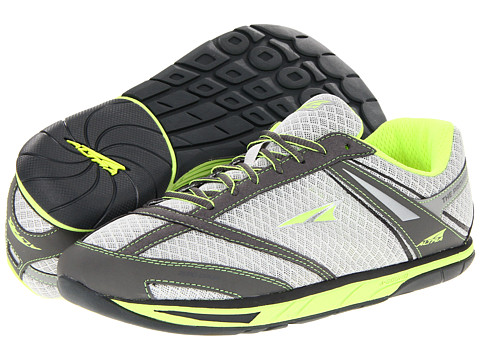
Hope - Altra shoes, love them.
The goal for 2013 is take what I can when I can and to cherish every event, run and moment that I will experience on the trails and the roads.
You will begin running longer on back-to-back weekends. You will also begin building a semi-long mid-week run, preferably on Wednesday. Obviously you will have higher weekly mileage as a result. You may vary your schedule as necessary but nothing substitutes for the weekend long runs which should be on trails or fire roads. Other runs may be on paved roads.
Rest is essential. It is recommended that you not run at all on Mondays and Fridays. There are occasional easy weeks for recovery.
So my official training begins on Monday and the first stop is to a Doctor to have him figure out how to get my foot healthy. Right now it hurts when I walk or run and it has since Surf the Murph. I have had relief through taping but alas I have now faced the reality of getting it looked at. My theory is that I have posterior tibial tendinitis which is being aggravated by the calf tear of a few years back. So my thinking is the Doctor does some ART on the calf and maybe the foot, tweaks me, advises me and sends me on my way. Based on the above training I can give him a few weeks and my Chippewa plans will still be ok.
Back in December I talked about my Altra Provision shoes and that they had helped my foot pain and they did but I still have had pain so I took off this past week to see if not running would help (plus its been really cold, so I guess I wimped out too). The time off did not help, so to the Dr. I go. I will be again seeing a Chiropractor who does ART and Graston and other stuff.
A few weeks back I also picked up a pair of Altra Lone Peaks, I had the choice of the Superiors which I liked and the Lone Peaks and I guess many other shoes but I love the fit of Altras. I will write about that decision and give an update on my Altras in a future post.
So I have begun 2013 as I did 2012, the difference is I am dealing with it in January ahead of Chippewa versus facing my reality at Chippewa. Hopefully this works out better as I have a lot of race plans for this year. Right now my simple hope is to run 5 then 10 then 20 then 30 miles without foot pain.
Ok, I have only run once in them but I have never had a shoe that seemed to fit me so well and after 90 attempts I have had a few data points. The shoes I have fallen in love with are the Provisions from Altra, they were a Christmas present from my wife.
If you are not familiar with Altra, they are a newer shoe company and only make zero drop shoes. They are not the barebones minimalist which allow all sensations to come through (think Merrell Trail Gloves or Vibram FiveFinger) nor are they super cushioned and thick monstrosities (like Hokas) but they seem like the perfect blend of the two. I wanted the Provisions as they are the stability shoes from Altra and I was hoping that they would help support my sore foot. The way Altra adds stability is a really interesting method that seems to work amazingly well. In all my runs since Surf the Murph, I have had posterior tibilas tendon pain, It has ranged from intense to twinges especially as the pace or elevation increased and it seemed to depend on which shoes I was wearing. I had only recently figured out that some of my shoes caused more pain but on today's run, I had zero pain, not even a twinge. Their stability wedge is indeed just that a removable insert that is thicker on the insole and thiner towards the outsole, here is Altras' description:
Stability Wedge
The Altra stability wedge allows for maximum stability without
pressing into the arch and weakening the foot. Unlike traditional
stability systems that only provide stability underneath the arch, the
full-length 4 mm varus, angled from the outside to the inside of the
shoe, runs evenly from heel to toe and accounts for both early and late
stage foot collapse. The stability wedge sits underneath the insole of
the shoe and can be used in both shoes or a single shoe for those who
have collapse on just one foot.
For a good understanind of it watch this youtube video -
What's this mean is when you buy the Provisions you get two removable inserts, the stability wedge and their normal insert which is included on most of their other shoes, here is their description of it:
Support Footbed
Providing some arch support, this 5 mm support footbed gives you the
feeling of a more traditional insole. For those new to Zero Drop™
technology, this insole is a good place to start.
So Altra has provided me with a shoe that I can reconfigure either over time or for each run, for now I plan to run with both inserts and have maximum protection and then when I am pain free, I will remove the stability
wedge and work to strengthen the foot. I have read that the Provisions without the
stability wedge are basically the Altra Intuitions so by getting the
Provisions I have gotten some additional flexibility for only $5 more, of course in this particular instance they were a gift. Finally when I really want to work on maximizing the development of my foot strength, I can remove
the support footbed insole and simply use the shoe with no inserts whch they refer to as follows:
Strengthen Footbed
Allow your feet to build strength and support with 3 mm of flat
insole. For those new to Zero Drop™ technology, this footbed should be
broken into slowly. Transition to the strengthen footbed by first
wearing it on shorter runs and gradually working up to your regular
mileage. For those with stronger feet, transitioning to the strengthen
footbed should be easier.
So with that all said, here are the the combinations possible along with the stack height:
Stack Height (total thickness of the shoe):
With Stability Wedge and Support Footbed: 25mm (medial heel)/ 25mm (medial forefoot).
With Support Footbed: 20mm (heel)/ 20mm (forefoot)
Strengthen Configuration (no footbed): 15mm (heel)/ 15mm (forefoot).
Ok, maybe one run does not provide the definitive data set that would allow me to say these are the best shoes I have ever run in but at least its' a good start.
I copied this into a blog post a few months back and thought the perspective was good but of course I never did take the time to post it. Since I think I am starting to figure it out again and it seems appropriate for this time of year, I figured it was time. For those that don't know me, I am Christian and do believe in God, if you are not Christian, don't be offended but think about the concept. Like many concepts in the bible, there is a lot of age old wisdom. Anyway this devotion came through just at the right time as work, running, life was getting pretty hectic, it's originally from Rick Warren's daily devotion
Buffer Your Schedule In preparation for a decade of destiny, we've been talking about the need to be physically healthy - that God wants us to take care of our bodies. And I want to stress one more time that unrelenting stress harms our bodies.
Why do we wait until our health plummets before we decide to create margin in our lives? The Bible teaches that your body needs downtime in order to heal and re-energize. Listen to why this is so important: when you're overloaded by activity, you can only think of yourself. You're in survival mode, just trying to make it through another day. And that limits your usefulness in ministry! When you have no downtime or margin in your life and God taps you on the shoulder, saying, "I'd like you to do this for me," your first response isn't joy. Your first response is, "Oh, no! Another thing to do! Sorry, God -- I'd like to do that, but I'm just too busy." We end up resenting the great opportunities God brings into our lives. But when we deliberately and specifically add downtime into our lives, we become available for God to use us as we head into this decade of destiny. So when things get hectic, take the time to take care of yourself. You don't have to live on overload. You don't have to live in survival mode. Begin today to build a buffer around your schedule. Then enjoy the benefits of margin -- and see what God does next!